
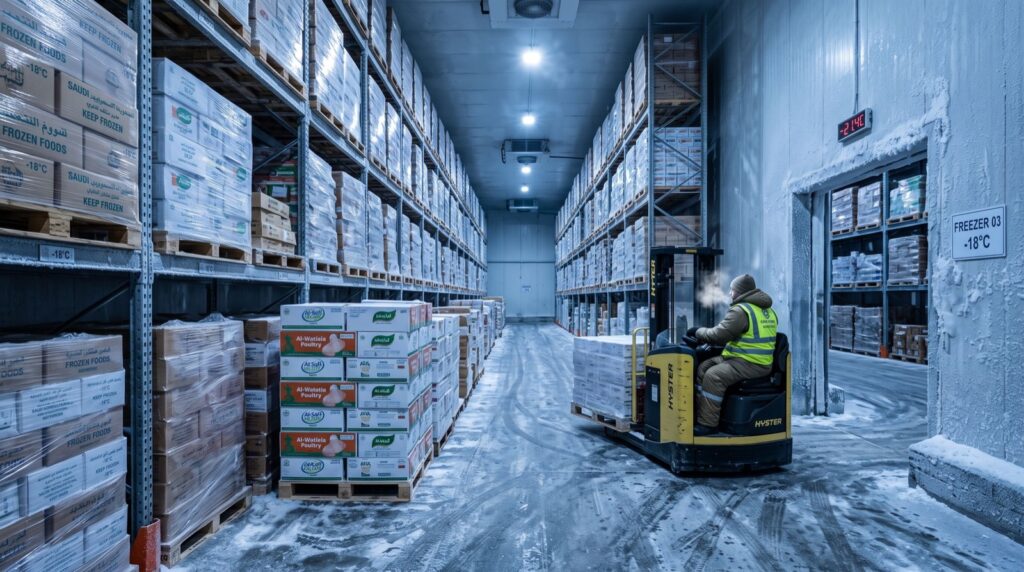
Chilled Storage in Dammam: How to Keep Food Fresh From Warehouse to Table in 2026
Chilled storage in Dammam is the difference between a delivery of crisp produce and a truck of wilted, wasted stock. For anyone who cooks, sells, or supplies food along Saudi Arabia’s Eastern Province, cold-chain reliability is not a luxury; it is the foundation of quality. This 2026 guide walks through how chilled and ambient storage work together to protect flavour, safety, and shelf life, and how food businesses can build a storage strategy that pays for itself in reduced waste.
From home caterers scaling up to restaurants and grocery suppliers, the same rules apply: the moment temperature control breaks, food quality follows. Let’s look at how to keep it intact.
Why Temperature Control Matters More in Dammam’s Climate
Dammam sits on the Gulf coast, where summer heat and high humidity combine to accelerate spoilage. Bacteria multiply fastest between 5°C and 60°C, a range food-safety experts call the “danger zone.” In a coastal warehouse without proper cooling, perishable goods can slide into that zone within minutes of a loading-dock door opening.
Chilled storage holds food in the safe band, typically 0°C to 8°C, slowing bacterial growth and preserving texture and taste. The FAO food safety guidance stresses that maintaining a consistent cold chain from source to consumer is central to preventing foodborne illness and reducing loss. Businesses handling fresh ingredients rely on professional Chilled Storage in Dammam to keep that chain unbroken.
What happens when the cold chain breaks
A single lapse can be invisible and still dangerous. Milk that warmed briefly may look fine yet sour early. Leafy greens lose crispness within hours. Seafood, one of Dammam’s staples, is especially unforgiving. Consistent temperature, not occasional cooling, is what protects both safety and quality.
Chilled vs Ambient Storage: Which Food Goes Where?
Not every ingredient needs refrigeration. Knowing which foods thrive at room temperature saves money and frees chilled space for products that truly need it.
| Food category | Best storage | Typical temperature |
|---|---|---|
| Fresh dairy and meat | Chilled | 0°C to 4°C |
| Leafy greens and produce | Chilled | 2°C to 8°C |
| Canned and packaged goods | Ambient | Room temperature |
| Rice, flour, spices | Ambient | Room temperature |
| Chocolate and confectionery | Chilled or cool ambient | Below 18°C |
Shelf-stable pantry staples belong in Ambient Storage in Dammam, where controlled humidity keeps grains and spices dry and fresh without the cost of refrigeration.
How Do You Build a Reliable Cold Chain for a Food Business?
A dependable cold chain is a series of small, disciplined steps. Miss one, and the whole chain weakens. Here is a practical sequence any food supplier can follow.
- Receive fast. Move deliveries into chilled storage within minutes, not hours.
- Log temperatures. Record fridge and warehouse readings at set intervals.
- Separate zones. Keep raw and ready-to-eat foods apart to prevent cross-contamination.
- Rotate by expiry. Use first-expiry, first-out so the soonest-dated stock sells first.
- Protect transport. Use insulated boxes and refrigerated vehicles for the last mile.
Working with an experienced local team that understands both packing and temperature control makes every one of these steps easier to maintain.
Original tip: pre-chill before you pack
A trick many professional kitchens use is pre-chilling packaging and transport boxes before loading warm-picked produce. Cold packaging absorbs less heat during transfer, so the food stays in its safe band longer. It costs nothing and noticeably improves arrival quality on long Eastern Province routes.
Reducing Food Waste With Smart Storage
Food waste is a margin killer. Every spoiled crate is money and effort thrown away. Smart storage attacks waste from several angles:
- Right temperature for each product, no guessing.
- Clear labelling with received and expiry dates.
- Regular stock checks to catch ageing items early.
- Portioned storage so you open only what you need.
- Flexible chilled capacity to handle seasonal surges.
Combined, these habits can meaningfully cut spoilage, and the savings often exceed the cost of professional storage itself.
Organising a Food Storage Space That Actually Works
A cold room is only as good as its layout. Even the best chilled storage in Dammam loses value when stock is crammed in without a system, because staff waste time searching and older items get buried behind new ones. A few organising principles turn chaos into a smooth operation.
Start by zoning the space. Give each food category a fixed home so anyone can find raw meat, dairy, or produce without opening every crate. Keep raw proteins on lower shelves so nothing drips onto ready-to-eat foods below, a basic but vital food-safety rule.
A simple zoning layout for food storage
- Top shelves: Ready-to-eat and packaged chilled items.
- Middle shelves: Dairy and prepared ingredients.
- Lower shelves: Raw meat, poultry, and seafood in sealed containers.
- Door and warmest zones: The most temperature-tolerant items only.
Leave breathing room between items so cold air circulates freely. Packing a chilled room wall to wall blocks airflow and creates warm pockets where spoilage begins. Consistent circulation keeps every crate in the safe band, not just the ones near the fan.
Seasonal demand and Ramadan planning
Food demand in Saudi Arabia is highly seasonal. Ramadan alone can double the volume of perishables a supplier moves in a matter of days. Planning chilled capacity ahead of these peaks prevents the twin disasters of running out of space or leaving overflow stock in unsafe conditions. Flexible storage that expands for the season and contracts afterward keeps costs sensible while protecting quality when it matters most.
Frequently Asked Questions
What temperature should chilled storage in Dammam maintain?
Most chilled storage operates between 0°C and 8°C, with fresh meat and dairy kept nearer 0°C to 4°C. Reliable facilities monitor and log temperatures continuously so you have proof of a maintained cold chain.
Which foods can I keep in ambient storage instead of chilled?
Shelf-stable items such as rice, flour, canned goods, spices, packaged snacks, and dry ingredients belong in ambient storage. Reserve chilled space for perishables like dairy, produce, and fresh proteins.
How quickly does food spoil without refrigeration in a hot climate?
In Dammam’s heat, perishable foods can enter the bacterial danger zone within minutes of exposure. That is why fast receiving and unbroken chilled storage are essential for safety and quality.
Can small food businesses afford chilled storage?
Yes. Flexible, shared, and short-term chilled storage lets small caterers and suppliers pay only for the space they use, avoiding the cost of buying and running their own cold rooms.
Conclusion
Great food starts long before it reaches the plate, and chilled storage in Dammam is where much of that quality is protected. Pair chilled space for perishables with ambient storage for pantry staples, log your temperatures, rotate by expiry, and pre-chill your packaging. These simple disciplines keep food safe, fresh, and profitable through 2026.
Ready to protect your ingredients? Map which foods need cold and which do not, then partner with a storage provider offering both chilled and ambient options. Fresher deliveries and less waste are only a smart storage plan away.